start with how you met
How to write your love story: prompts and a simple structure
Updated November 19, 2026
The short answer
To write your love story, start with the moment you met, add three or four turning points, and end with an ordinary day now and one hope for what is ahead. Use concrete details (the place, the weather, what was actually said) instead of big statements about love. To turn it into a gift, Our Little Story makes your answers to about ten questions into a 12-page illustrated picture book of the two of you.
Most people freeze when they try to write their love story because they start with the feeling. Start with the facts instead: where you were, what you were wearing, what went wrong. The feeling comes through on its own when the details are right.
Below are ways to share the story once it is written, then a simple structure and prompts to bring the details back.
Turn it into an illustrated picture book
If you would rather answer questions than face a blank page, this does the structure for you. You answer about ten short questions, typed or spoken, and add a clear photo of each of you. Your answers become the words of a 12-page picture book and your photos become the two of you on every page. Preview the cover and first page free; the full book, a print-ready PDF and a sealed gift reveal are $29.
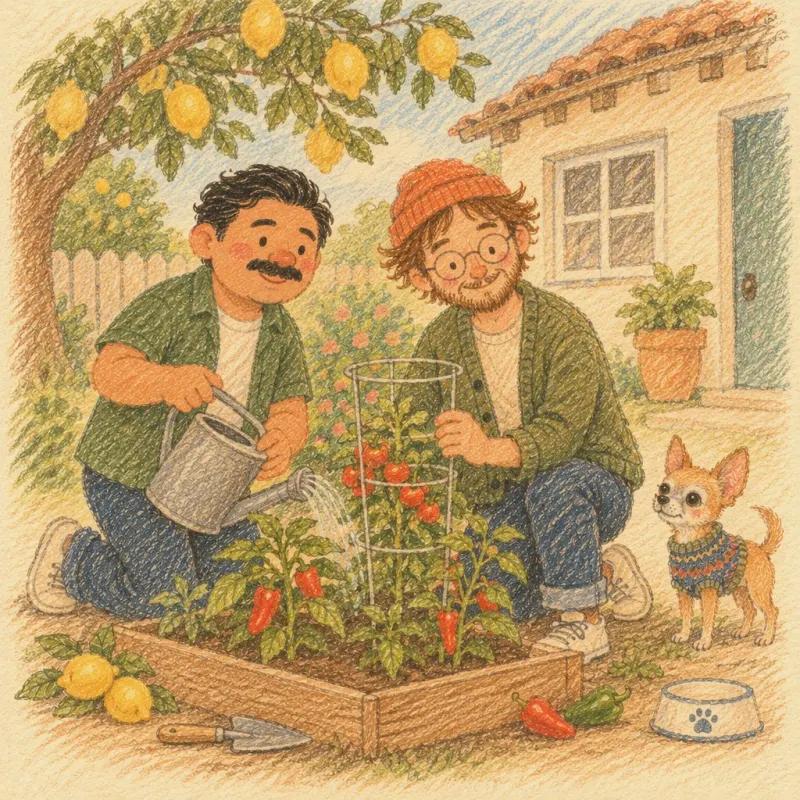
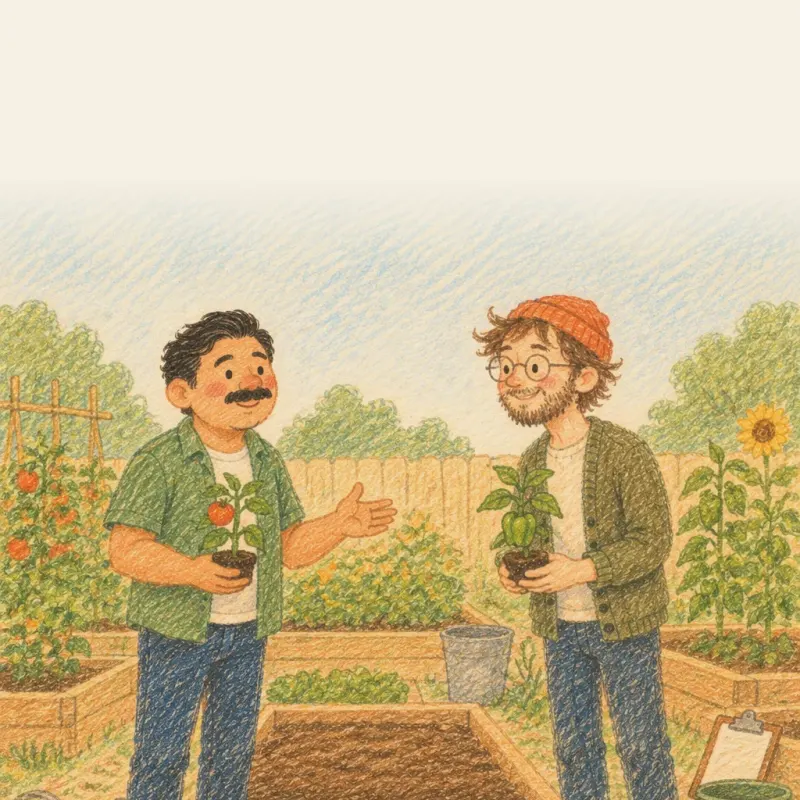
From a sample book about Luis and Gabe, a fictional couple. Read it aloud as a toast or vows
A love story is the backbone of a good anniversary toast or vow renewal. Keep it under three minutes: how you met, one turning point, one funny moment, now. Practice it out loud twice.
Write it as a letter
Address it to them and tell the story back to them, in the second person: 'You walked in late.' Handwrite it on good paper. It turns a story into a gift without any extra steps.
Use it as captions in a scrapbook
Pick one photo for each part of the story and write two or three sentences under each. The story gives the scrapbook an order, so it reads like a book instead of an album.
Record it in your own voices
Sit down together and tell the story to your phone, interrupting each other. You will argue about the details, and that is the best part. Keep the file somewhere safe.
Seal it for a future anniversary
Write the story as it stands today and seal it in an envelope marked with a date five or ten years away. Open it together then and write the next chapter.
A simple structure: beginning, turning points, now
Beginning: the day you met, or the day you first noticed each other. Set the scene in a sentence or two: the place, the time, what each of you was doing there.
Turning points: three or four moments when things changed. The first date, the first trip, moving in, a hard season you got through, the proposal. One short paragraph each, built around one specific detail.
Now: an ordinary day in your life today, the small routine that is only yours. End with one thing you are looking forward to together.
Prompts that bring the details back
How you met: Where exactly were you standing? What did you notice first? What did you almost not say? Who else was there?
Early days: What did you do on the first date, and what went wrong? When did you first laugh together until it hurt? What was the first message you saved?
Turning points: When did you know? What was the first hard thing you faced together? What was the moment the other person surprised you?
Now: What is your inside joke, and where did it start? What does a perfect lazy Sunday look like? What do you always do together, big or tiny? What are you both looking forward to?
What makes a love story sound generic
Big words with no picture behind them: soulmate, everything, meant to be. Replace each one with a moment that shows it. 'You drove two hours in the snow to bring me soup' says more than 'you always take care of me'.
Leaving out the funny parts. The flat tire, the burned dinner and the wrong train make a story feel real. Keep them in.
Questions people ask
How long should a love story be?
One to two pages is plenty for a letter or a toast. A picture book of 12 pages has only a few sentences on each page, so short and specific wins.
What if our how-we-met story isn't dramatic?
Most aren't. A line at the DMV or a group chat is a perfectly good beginning. The ordinary details are what make it yours.
Should I write it in first person or about 'them'?
For a letter, talk to them directly ('you walked in late'). For a book or a toast, tell it about the two of you ('they met in a parking lot'). Both work; pick one and stick with it.
Can I just talk instead of typing?
Yes. In Our Little Story every answer can be spoken: tap the mic and talk, and it is written down for you.